
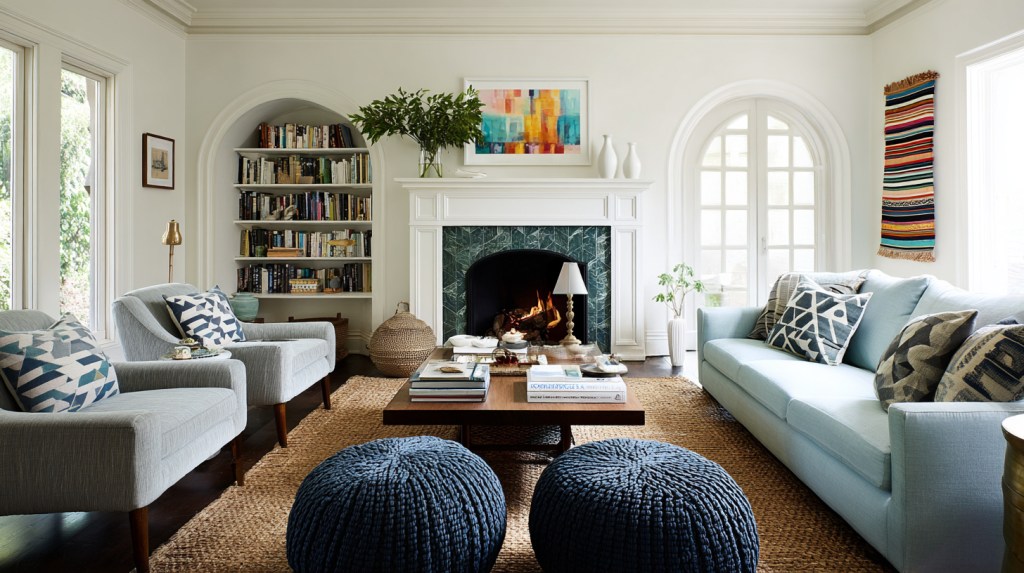
We’ve all been there. You walk into a room and can’t quite put your finger on why it feels so special. Nine times out of ten, the secret isn’t just about the color palette or the furniture choices. It’s in the textures. The way soft linen drapes over a velvet sofa, for example, or how smooth marble contrasts with rough wood. It’s all about the visual interest that only contrasts can create.
Mixing textures is one simple way to transform a flat, one-dimensional space. This method makes it feel alive and inviting. It also helps the space feel completely pulled together. But here’s the thing: it can also feel overwhelming when you’re staring at all the options. How many textures are too many? Which ones work together? Where do you even start? We’re breaking it all down in this complete guide to mixing textures. You can create spaces that not only look incredible but also feel amazing to live in every single day.
Why Texture Matters More Than You Think (Trust Us on This One)
When starting to imagine a room, it is easy to get completely obsessed with the color palette. But here’s what nobody tells you when you’re starting out with interior design: color is only half the story.
The real game-changer? Texture.
Texture adds this incredible depth that paint alone simply can’t touch. We learned this the hard way. We painted our living room this gorgeous terracotta red. We were going for that effortless earthy vibe. However, the room still felt… flat. Like something was missing. The moment we added a bouclé rug, some linen curtains, and swapped our smooth cotton cushions for chunky velvet ones? Completely different space. Same color, totally transformed.
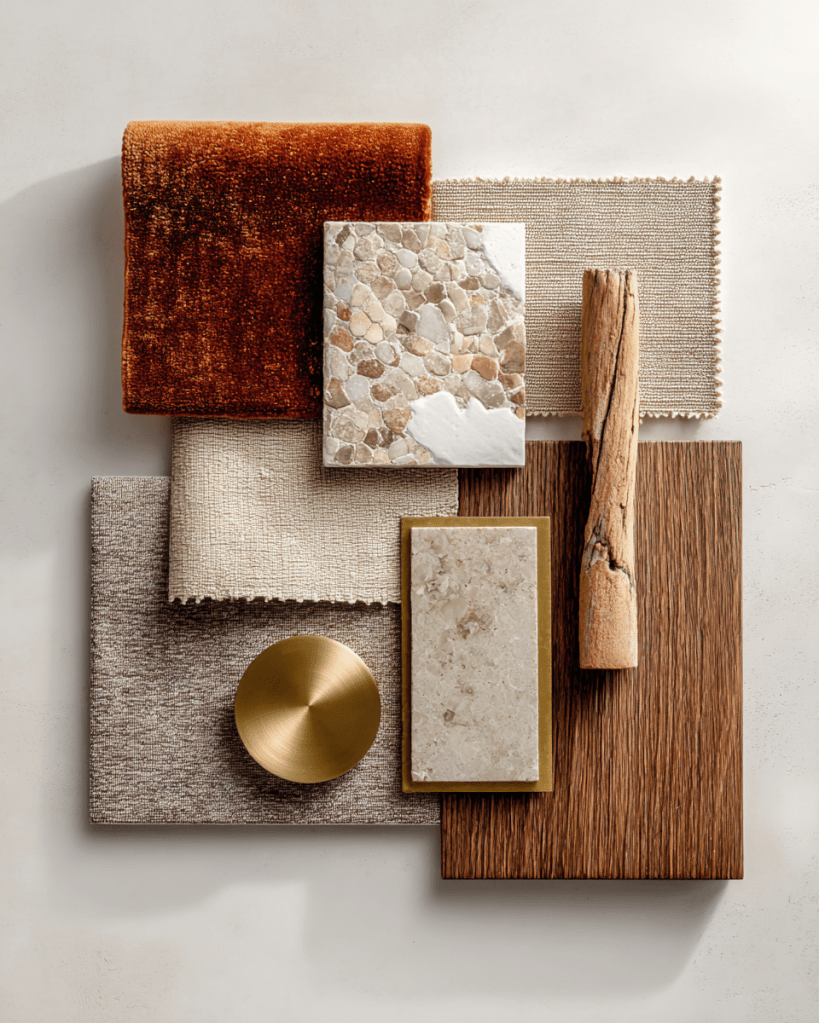
Soft velvet invites us to touch and relax. Smooth stone and brass feel sophisticated and grounding. Natural wood and woven fabrics create warmth and authenticity. By combining different textures, we make rooms that engage our senses. They feel comfortable, not just visually appealing but emotionally satisfying.
And it’s not just visual, right? Texture affects how a room actually feels when you’re living in it. Those soft, plush materials like velvet, they make you want to curl up and stay awhile. Meanwhile, sleek surfaces like glass and polished metal bring this sense of sophistication that makes everything feel more elevated. The magic really happens when you get that balance right. Too much soft and cozy, your space might feel a bit too casual (hello, college apartment vibes). Too much sleek and smooth, and suddenly you’re living in a beautiful but slightly intimidating showroom.
Your texture choices tell people who you are before you say a single word. Are you the person who loves bringing the outdoors in with natural materials? Or do you lean into that glamorous, metallic vibe? Most of us are somewhere in between, and that’s where mixing textures gets really fun.
Understanding different textures categories
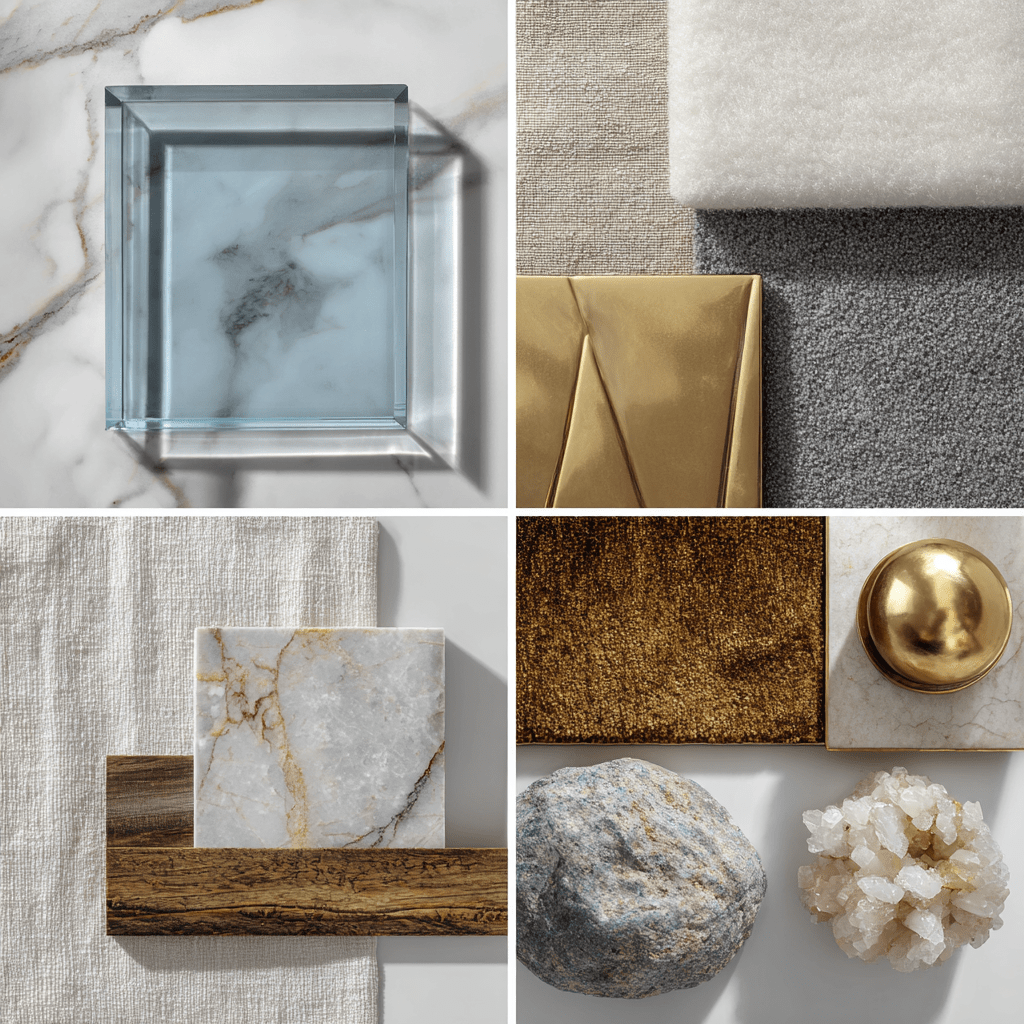
Not all textures are the same. Understanding the basic categories helps you make intentional choices. It also allows you to make confident decisions when mixing and matching different materials.
Visual vs. Tactile Texture
Visual texture is what you see. It’s the pattern on wallpaper, the grain in wood furniture, or the weave visible in a fabric. Even if a surface is physically smooth, visual texture creates interest through pattern and depth. Tactile texture is what you feel when you actually touch a surface. It’s the softness of a cashmere throw, the coolness of marble countertops, or the roughness of a jute rug.
The best rooms incorporate both types of texture. You might not touch your wallpaper or artwork constantly. However, the visual texture they provide is essential for creating layers. It gives a story to your space. Tactile textures on popular items like sofas, cushions, and throws influence your comfort. They affect the overall sensory experience of the space.
Smooth textures
Smooth textures include materials like glass, polished metal, lacquered furniture, silk, satin, and high-gloss finishes. These surfaces reflect light beautifully and create a sense of sophistication and cleanliness. They’re particularly effective in smaller spaces because they help bounce light around, making rooms feel larger and brighter.
However, again balance is key: too many smooth textures can make a space feel cold or impersonal. To avoid this, you may want to combine them with warmer, softer materials to create equilibrium.
Rough textures
Rough textures encompass natural materials like raw wood, exposed brick, concrete, stone, jute, sisal, and rattan. These surfaces absorb light rather than reflect it, creating warmth and grounding energy in a space. Rough textures bring an organic, earthy quality that makes rooms feel more casual and lived-in.
These textures work beautifully in both rustic and modern spaces. In contemporary design, a single rough-textured element can provide the perfect counterpoint to sleek furnishings. This element could be a concrete accent wall or a chunky wooden coffee table.
Soft textures
Soft textures are the cozy elements we naturally gravitate toward for comfort. Examples include velvet, bouclé, chenille, faux fur, knit fabrics, and plush carpets. These materials invite touch and create instant warmth in any room. They’re essential for making spaces feel welcoming and comfortable, especially in living rooms, bedrooms, and reading nooks.
Soft textures can also have acoustic benefits, absorbing sound and making rooms feel quieter and more peaceful. This is particularly valuable in open-plan spaces or rooms with hard flooring and minimal window treatments.
Shiny and reflective textures
Metallic finishes, mirrors, crystal, and lacquered surfaces fall into this category. Shiny textures add glamour and elegance while reflecting light throughout your space. They’re particularly powerful as accent elements because they naturally draw the eye and create focal points.
The trick with reflective textures is using them strategically. A little goes a long way. Brass hardware, a mirrored coffee table, or metallic light fixtures provide just enough shine without overwhelming the space.
The Golden Rules for Mixing Textures Successfully
Now that you understand the texture categories, let’s talk about how to combine them. These principles will guide your decisions and help you create balanced, beautiful spaces.
Rule n. 1: Follow the Rule of Three (or More)
Interior designers often work with the rule of three when mixing textures. This means you should aim to incorporate at least three different textures in any given space. This creates enough variety to be interesting without becoming chaotic.
For example, in a living room, you might want to combine a smooth leather sofa. Add soft velvet cushions. Pair these with a rough jute rug. That’s your base of three textures. From there, you can layer in additional elements. Consider adding a chunky knit throw. Include a glass coffee table. You can also add wooden side tables.
The key is to make sure that these textures are distributed throughout the space rather than clustered in one area. Your eye should be able to travel around the room and encounter different textures at every glance.
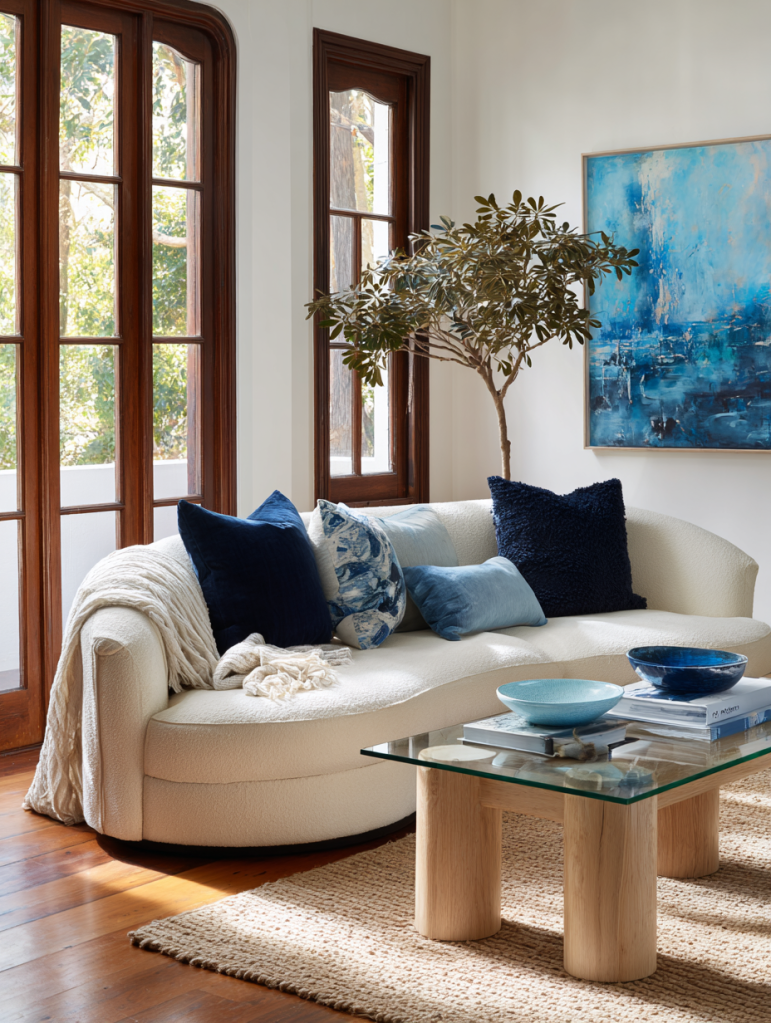
This interior is a perfect example of the rule of three textures. Soft velvet cushions and boucle upholstery provide plush comfort. Smooth glass and ceramic surfaces add sleek sophistication. The woven jute rug and natural wood introduce organic warmth. The space achieves visual balance by using these three distinct texture families. This approach also provides enough variety to create depth and interest without overwhelming the eye. The result is a harmonious, layered interior where each texture plays a distinct role in the overall composition.
Rule no. 2: Balance Smooth with Rough
Creating harmony between opposing textures prevents your space from feeling too polished or, on the contrary, too rustic. If you have sleek, contemporary furniture, ground it with natural, textured elements like woven baskets, wood accents, or stone details. Conversely, if your space features lots of rough, organic materials, polish it up with smooth glass vases. Use metallic picture frames or silky curtains.
This balance is particularly important in modern and contemporary spaces. The abundance of smooth surfaces can sometimes give a sterile vibe. Introducing organic, rough textures immediately adds warmth and makes the space feel more inviting.
Rule no. 3: Mix Matte and Shiny Finishes
Just as you balance smooth and rough, you also want to balance matte and reflective surfaces. Too much shine can feel overwhelming or garish. On the other hand, all matte finishes might make a space feel flat. They may also lack dimension.
In practice, you can use matte-painted walls with a glossy ceramic lamp. Combine a matte velvet sofa with metallic accent tables. Balance matte wood floors with a glass chandelier overhead. The interplay between surfaces that absorb light and those that reflect it creates dynamic visual interest. This occurs throughout the day as natural light changes.
Rule no. 4: Consider Scale and Proportion
Texture mixing isn’t just about choosing different materials. It’s also about varying the scale of patterns and textures. Combining large-scale textures with fine, delicate ones creates a more interesting composition
For instance, pair a chunky cable-knit throw with smooth linen cushions and a finely woven decorative pillow. Or balance a large-scale grasscloth wallpaper with delicate silk curtains and a tightly woven area rug. This variation in scale prevents the textures from competing with each other and creates a more sophisticated layered look.
Rule no. 5: Stay true to your style
While experimenting with textures, make sure your choices align with your overall design style. Different aesthetics naturally gravitate toward certain texture combinations.
Scandinavian and minimalist styles favor natural textures like linen, light woods, wool, and simple cottons. They often include occasional smooth ceramic or glass accents. Bohemian and eclectic styles embrace maximum texture mixing with plenty of woven materials, macramé, fringe, tassels, and layered textiles. Traditional and classic styles often feature rich textures like velvet, silk, polished wood, and brocade. Modern and contemporary spaces typically balance smooth, sleek surfaces with strategic natural texture accents.
The textures you choose should feel authentic to your personal style rather than following trends that don’t resonate with you.
Room-by-Room Texture Mixing Ideas
Let’s get practical and talk about how to apply these principles in specific rooms throughout your home.
Living room
Your living room is the perfect place to experiment with texture mixing. It typically contains diverse furniture pieces and accessories.
Start with your largest pieces. If you have a smooth leather or velvet sofa, use cushions to add texture. Choose various textures like linen, chunky knit, or faux fur for the cushions. Add a textured throw blanket for extra depth. Choose an area rug that contrasts with your flooring. If you have smooth hardwood floors, opt for a shaggy or textured weave rug. For carpeted rooms, consider a flat-weave or natural fiber rug like jute or sisal.
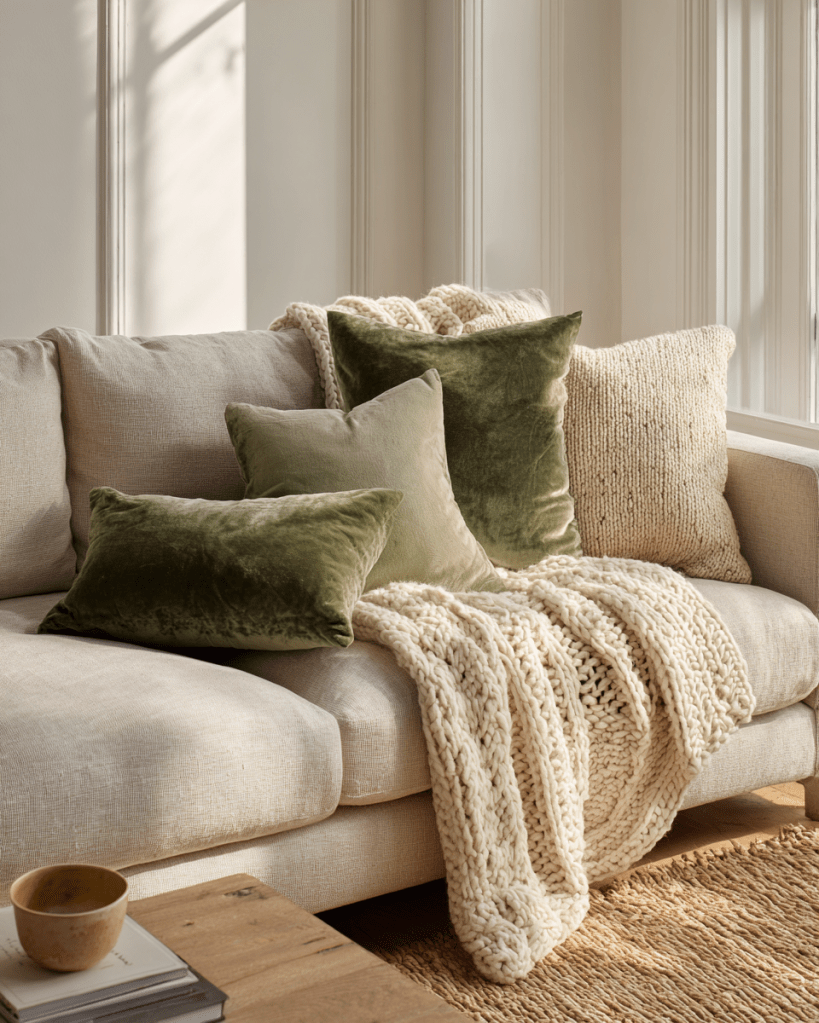
Mix your materials in furniture pieces. Combine wood coffee tables with metal side tables, or pair a glass coffee table with wooden shelving units. Don’t forget window treatments. Linen or textured curtains add softness while Roman shades in woven materials provide both texture and function. Layer your lighting by using different finishes. Use a brass floor lamp or a ceramic table lamp. Add a woven pendant shade for variety.
Kitchen and dining room
These functional spaces benefit from a mix of practical smooth surfaces and warmer textured accents.
Balance hard surfaces inherent in kitchens with softer elements. If you have glossy cabinets, consider matte countertops or vice versa. Introduce natural texture through wooden cutting boards, woven placemats, ceramic bowls, and textured dishware. For backsplashes, consider textured tiles, brick, or stone rather than flat, smooth surfaces.
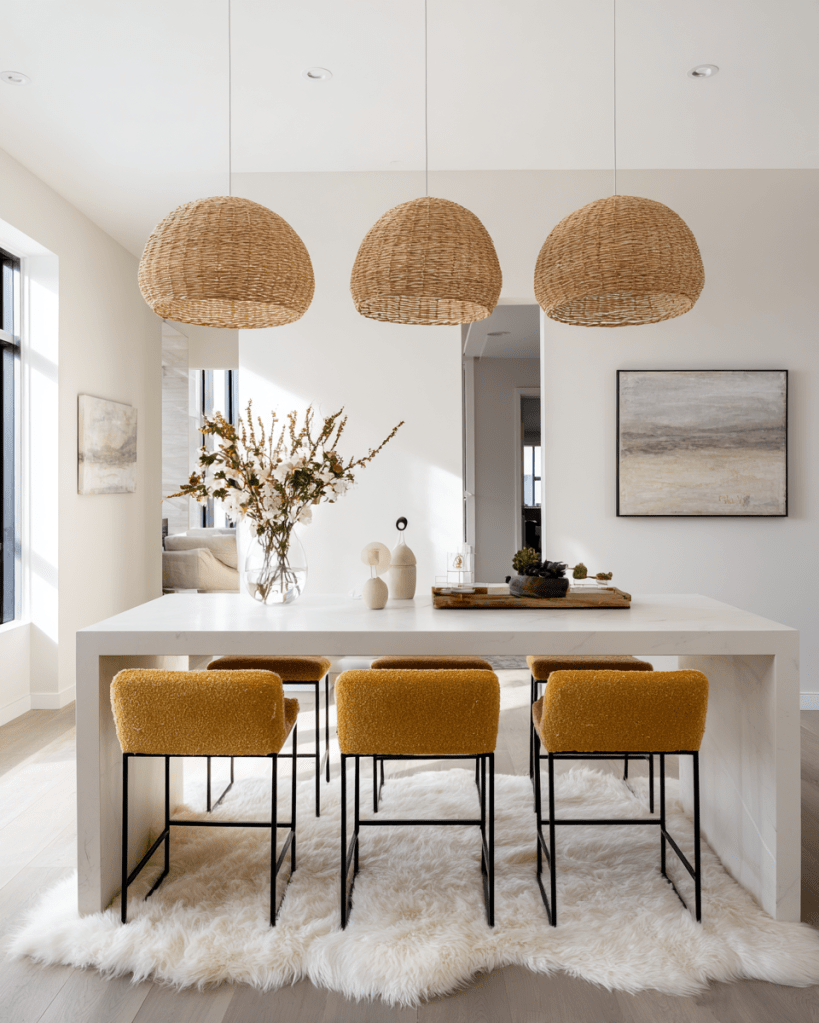
In dining areas, mix materials in your furniture in different ways. Pair a wooden dining table with upholstered chairs. Combine metal chairs with a wood table. Use a glass table with wooden or upholstered seating. You can also consider playing with table settings, layering linen napkins, textured placemats, ceramic or stoneware dishes, and varied glassware. Add fabric texture through curtains, a textured rug under the dining table, or upholstered dining chairs.
Bedroom
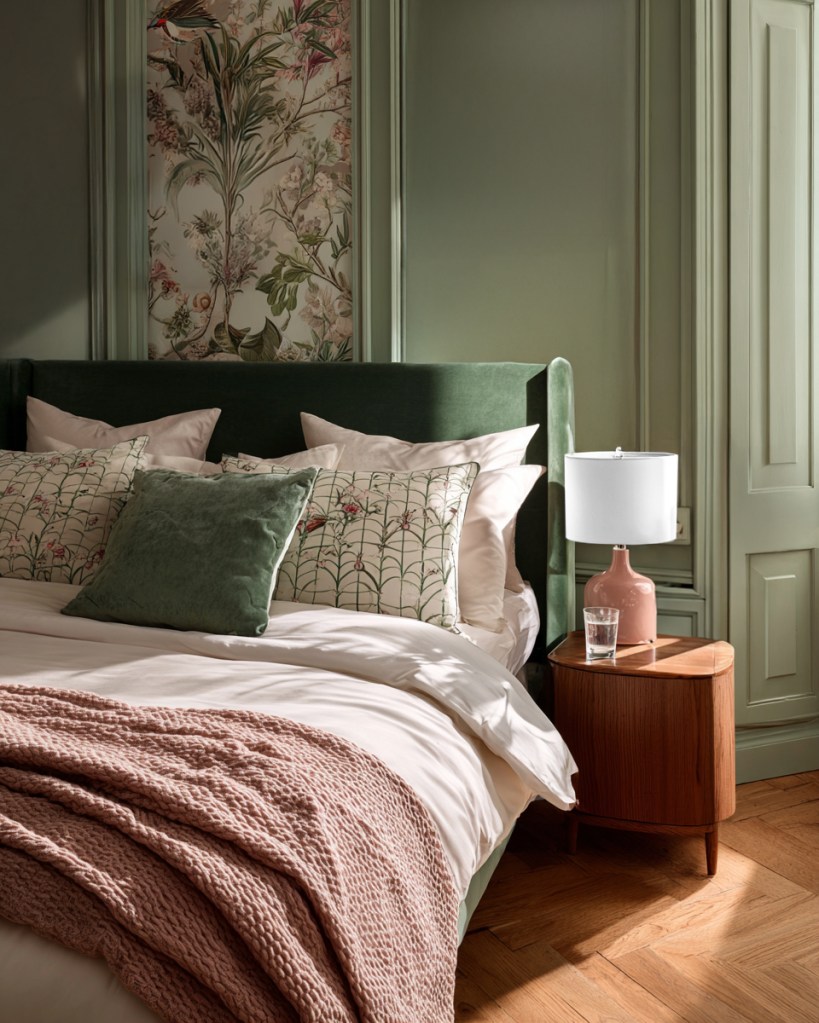
The bedroom should prioritise soft, comforting textures while still incorporating visual interests. Begin with your bedding and layer different textures for a luxurious feel. Start with smooth cotton or linen sheets, add a textured duvet cover or coverlet, layer with a velvet or chenille throw, and finish with pillows in varied textures like silk, linen, and chunky knit. Your bed frame material creates another texture opportunity. A wooden headboard pairs beautifully with soft textiles, while an upholstered headboard in velvet or bouclé adds instant coziness.
Consider your flooring underfoot. If you have hard floors, a plush area rug makes getting out of bed more pleasant. For carpet, layer with a natural fiber rug for added dimension. Window treatments in bedrooms work best with soft, flowing fabrics like linen or cotton that filter light gently. Add texture through furniture choices. Mix smooth nightstands with textured lamps. Combine glass or metal accents with wooden dressers. Incorporate woven baskets for storage.
Bathroom
Bathrooms naturally contain lots of smooth, hard surfaces, making texture mixing particularly important for warmth and visual movement.
Counter your hard surfaces with organic elements. Balance marble or tile surfaces with wooden accents like a teak bath mat, wooden storage boxes, or a timber-framed mirror. Introduce softness through towels in various textures, a plush bath mat, a textured shower curtain, and woven storage baskets.
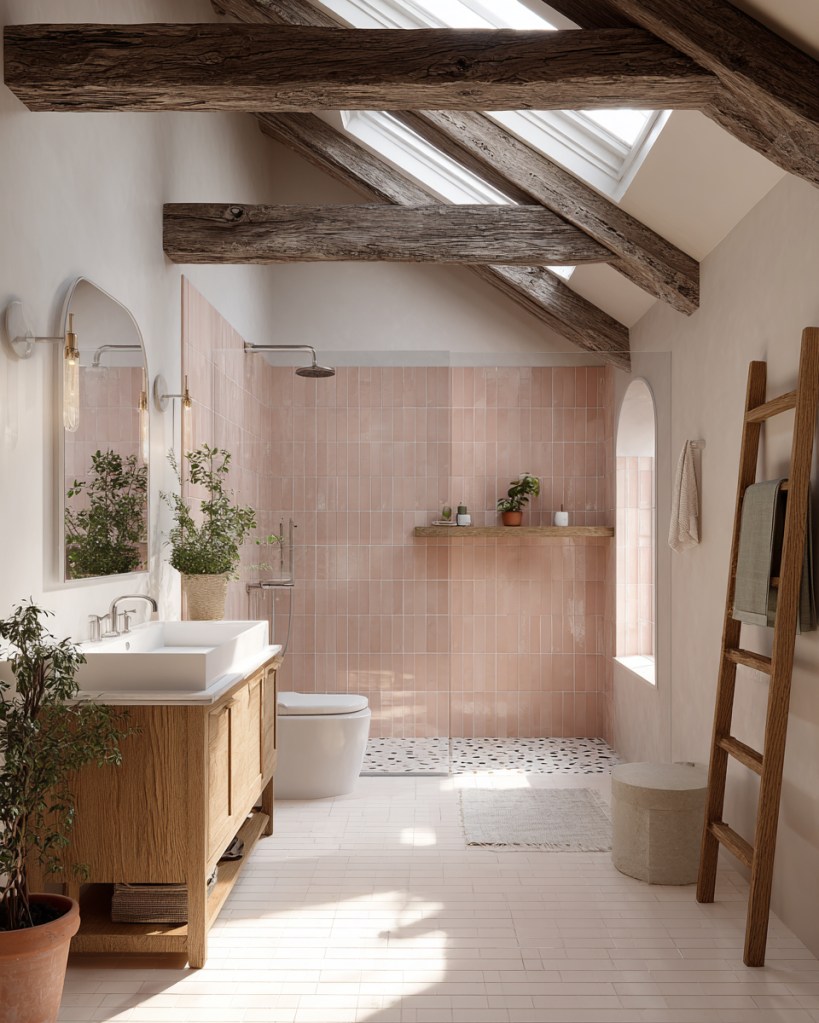
Create visual texture with tiles by mixing colors. Use matte and glossy finishes. Combine different tile sizes or incorporate textured stone or pebble tiles. Even small touches make a difference. Replace standard smooth hardware with textured or patterned knobs and pulls. Display natural elements like stones or shells. Add plants for organic texture.
Common Texture Mixing Mistakes to Avoid
Even with the best intentions, it’s easy to make missteps when mixing textures.
Too much (or too little) of one texture
For example, using too many smooth surfaces makes spaces feel cold and unwelcoming. Conversely, too many rough textures can make rooms feel heavy or chaotic. Always aim for balance between different texture types. If you notice your space trending too heavily in one direction, intentionally introduce contrasting textures to restore equilibrium.
Ignoring the existing architecture of your space
Your home’s architectural features have inherent texture that you should work with rather than against. If you have beautiful exposed brick walls, that’s a strong rough texture that needs balancing with smoother, more refined furnishings. If you have sleek, modern built-ins and minimal molding, introduce organic textures through furniture and accessories to add warmth. Fighting against your architecture creates visual tension in the wrong way.
Forgetting about finish
The finish of materials dramatically affects how texture reads in a space. A glossy finish on wood furniture creates very different texture than matte or distressed wood. Metallic finishes can be brushed, polished, or antiqued, each creating distinct textural effects. Always consider not just the material but also its finish when mixing textures.
Overlooking lightening
Lighting dramatically affects how we perceive texture. Smooth surfaces look entirely different in bright direct light versus soft ambient lighting. Rough textures become more pronounced with directional lighting that creates shadows. When planning your texture mix, consider natural lighting in the space. Also, consider artificial lighting and how it will interact with your material choices.
Adding texture without purpose
Every texture in your space should serve a purpose, whether that’s adding warmth, creating visual interest, or balancing other elements. Purpose guides you to the vibe you wish to achieve. Random textural additions without considering the overall composition can create visual clutter rather than cohesive design. Before adding any textured element, ask yourself what role it’s playing in the space.
Making it work for you
Here’s what we love most about mixing textures: there’s no single right way to do it. Your home should reflect your personal style and how you want to feel in your space. Some people naturally gravitate toward soft, cozy textures and create wonderfully enveloping spaces. Others prefer cleaner lines with strategic texture accents for a more minimalist approach.
The key is being intentional about your choices. As you select each piece for your home, think about its color and shape. Consider its texture as well. Consider how it relates to everything else in the room. Over time, you’ll develop an intuitive sense for what works together and what doesn’t.
Start by really looking at your current space. What textures are already present? Where could you add more variety? Sometimes the smallest change makes a remarkable difference in how a room feels. You could add a chunky knit throw. You might swap out smooth cushions for textured velvet ones.
We’d love to hear about your texture mixing adventures! What combinations have you tried? What’s your favorite texture to work with? Share your experiences in the comments below. After all, the best design inspiration comes from real people. They create beautiful, livable spaces they love coming home to every day.
 The Corners Edit
One response to “How to Mix Textures in Your Home: The Ultimate Guide”
[…] also bring beautiful, organic textures into your space (something we talked about extensively in our guide to mixing textures). That natural, earthy quality that makes a room feel warm and inviting? That’s often these […]
LikeLike