

We’ve all walked into that one room. You know the one. Maybe it’s a friend’s sun-drenched kitchen where morning coffee tastes better. Or is that Airbnb where you couldn’t quite figure out why you felt so relaxed. Nine times out of ten, the secret is natural light. It’s not just about having it. It’s about knowing how to maximize natural light. This makes every corner of your home feel alive.
Here’s the thing nobody tells you when you’re trying to brighten dark rooms. It’s not always about bigger windows or knocking down walls. Sometimes it’s about understanding how light moves through your space and working with it instead of against it. We learned this the hard way after moving into an apartment that felt like a cave despite having south-facing windows. The problem wasn’t the light. It was everything blocking, absorbing, or fighting against it.
This guide will walk you through everything we’ve learned about natural light. It includes ancient cultural wisdom. You’ll also find practical window treatment ideas that actually work. Whether you’re dealing with a dim hallway or trying to optimize limited windows, you’ll find strategies to increase natural light. These strategies will transform how your home feels every single day.
Why Natural Light Changes Everything (It’s Not Just About Brightness)
When we talk about maximizing natural light, most people immediately think: “Oh, so my room will be brighter.” Yes, absolutely. But that’s honestly just the beginning.
Natural lighting affects our bodies in ways we don’t always consciously notice. It regulates our circadian rhythms (that internal clock that tells us when to feel awake or sleepy). It boosts vitamin D production, and genuinely improves mood and productivity. Studies show that people with access to natural light sleep better, feel less depressed, and even recover faster from illness.
But beyond the science, there’s something deeply human about our relationship with daylight. It’s why we instinctively gravitate toward windows at parties. Why corner rooms with two exposures command higher rent. Why you feel different in a room at 7 AM versus 7 PM.
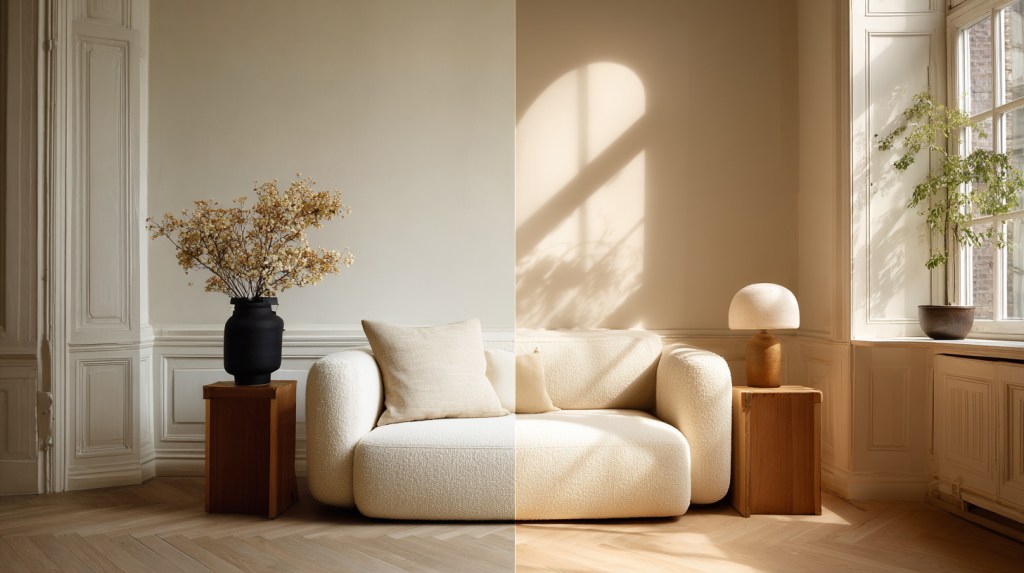
Comparison of morning and evening natural light in the same room showing how daylight quality transforms space
The homes that understand natural light don’t just look better in photos. They feel different when you’re living in them. They shift with the seasons. They breathe with the time of day. Somehow, they make ordinary moments, like reading the newspaper, cooking dinner, folding laundry, feel just a bit more special.
Reading Your Light: Understanding What You’re Working With
Before you can maximize natural light, you need to understand the natural light you already have. This sounds obvious, but most of us never actually stop to observe how light moves through our homes.
Here’s your homework: Spend one week noticing. Not changing anything yet, just observing.
Morning Light (6-10 AM)
Morning light is cool, crisp, slightly blue-toned. It’s energizing and clear—perfect for kitchens where you need to wake up and home offices where you need focus. If you have eastern-facing windows, you’re getting that champagne-golden glow that makes coffee taste better and everything feel possible.
What to notice: Which rooms get this light? How does it make you feel? Is it harsh or gentle?
Midday Light (10 AM-3 PM)
This is your strongest, most intense natural light. In the Northern Hemisphere, southern exposures flood spaces with consistent brightness year-round. This light is beautiful in winter. It can be potentially overwhelming in summer without the right window treatments.
What to notice: Do you have glare problems? Are there rooms that feel washed out or too bright?
Afternoon Light (3-7 PM)
Afternoon light turns warm, amber, cinematic. Western exposures capture those long shadows and honeyed tones that make living rooms feel like they’re wrapped in cashmere. This is the light photographers call “golden hour” for a reason.
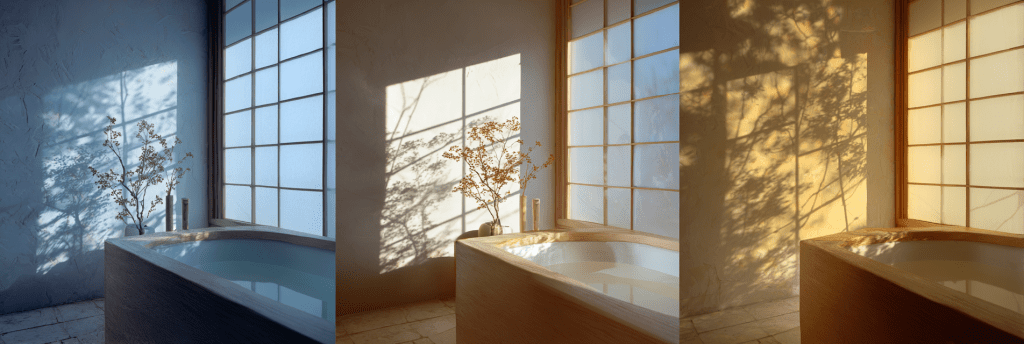
Progression of natural light throughout day showing morning, noon, and evening illumination in same space
What to notice: Which spaces feel magical during this time? Which feel too hot or glaring?
Seasonal Shifts Matter More Than You’d Think
That bright summer kitchen? It might feel like a cave come December when the sun sits lower in the sky. The cozy winter bedroom might become unbearably bright in June. Understanding these patterns helps you make smarter choices about everything from paint colors to furniture placement.
Walk through your home at different times, in different weather. Notice where light pools, where shadows linger, which rooms feel generous and which feel stingy. Take photos. They’ll help you see patterns you might miss in the moment.
How the World Celebrates Daylight: Cultural Wisdom From Around the World
The best ideas about how to maximize natural light come from cultures where it’s been cherished—or scarce for centuries. Let’s travel a bit.
Japanese Shoji Screens: The Art of Diffusion
In traditional Japanese homes, those iconic paper-paneled shoji screens don’t block light—they transform it. The translucent rice paper softens harsh rays. It creates an incredibly soft, even glow. This glow fills rooms without glare or harsh shadows.
The modern translation: Consider honeycomb blinds in translucent fabrics. You might also try linen Roman shades. Another option is DIY panels with natural fabric stretched over wooden frames. The goal is filtering, not blocking. You want light to enter but in a gentler, more flattering way.
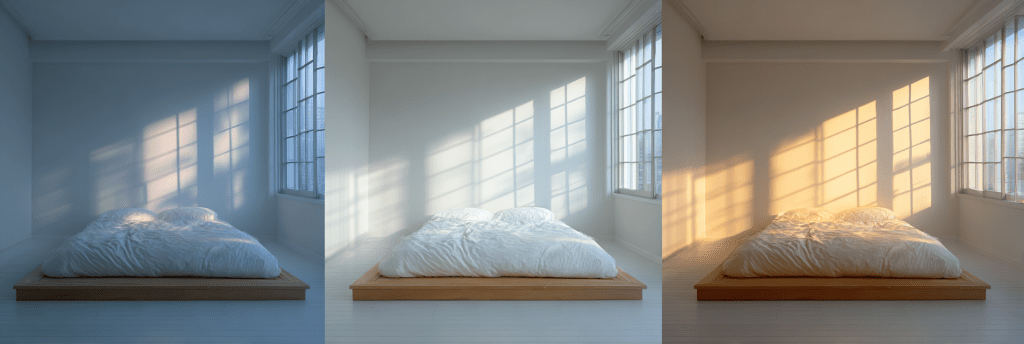
Japanese shoji screen filtering natural light creating soft diffused illumination in minimalist interior.
Why this works: Diffused light eliminates harsh shadows and creates visual comfort. Rooms feel brighter without the glare that makes you squint or causes screen reflection problems.
Mediterranean White-Washed Walls: Amplification Through Reflection
Ever wonder why Greek islands, Andalusian villages, and coastal Italian towns are painted brilliant white? It’s not just aesthetics—it’s climate adaptation as design genius.
In places where the sun is relentless, white walls bounce light deeper into rooms, cooling spaces while maximizing brightness. A white-washed wall can increase natural light in a room. It reflects up to 80% of available light back into the space.
The modern translation: The trick is using warm whites (not stark clinical white). Think Farrow & Ball’s “Pointing,” Benjamin Moore’s “White Dove,” or “Simply White.” These have enough warmth to prevent that sterile hospital feeling while still reflecting maximum light.
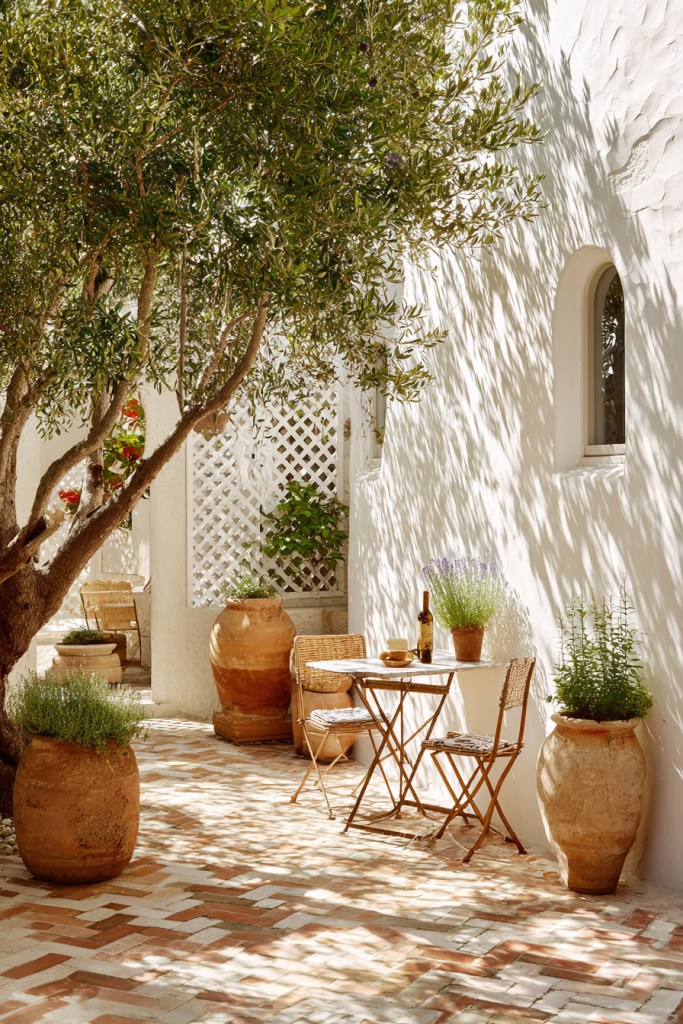
Mediterranean white-washed walls reflecting natural light in courtyard with plants and terracotta.
Why this works: Light-colored surfaces act as secondary light sources. They bounce natural light into corners and shadows. These areas would otherwise stay dark.
Scandinavian Light Obsession: When Every Light Counts
When you have six-hour winter days, you worship every glimpse of light. Scandinavian design has mastered the art of natural lighting through strategic choices:
- Glossy white floors that act as reflective surfaces
- Strategically placed mirrors that capture and redirect light
- Low, floating furniture that creates fewer shadow-casting obstacles
- Metallic accents (brushed brass, copper) that act as subtle light multipliers
The modern translation: Think about furniture height and placement. Low-profile sofas keep sightlines open. Glass coffee tables let light pass through rather than creating shadow blocks. Even 6 inches of space between furniture and walls allows light to wrap around objects.
Why this works: It’s about minimizing visual barriers to light movement. The more unobstructed pathways light has, the further it travels into your space.
7 Strategies to Maximize Natural Light (Without Renovating)
Now let’s get tactical. These are proven strategies to increase natural light using what you already have.
1. The Color Strategy: Paint Your Way to Brightness
Walls: Light, warm neutrals reflect up to 80% of available light. This is huge. Avoid cool grays in dim rooms. They’ll make spaces feel overcast even on sunny days.
Best colors to brighten dark rooms:
- Benjamin Moore “White Dove” (warm, soft white)
- Farrow & Ball “Pointing” (creamy white with warmth)
- Sherwin Williams “Accessible Beige” (neutral with warmth)
- Benjamin Moore “Classic Gray” (light warm gray, not cool)
Ceilings: Go one shade lighter than your walls, or pure white. A reflective ceiling is essentially a second light source that bounces daylight back down into the room.
Floors: Light wood or pale tiles bounce light upward. If you’re stuck with dark floors, add light-colored area rugs in zones where you want to maximize brightness.
The mistake to avoid: Going too cool-toned or stark white. These can make spaces feel clinical rather than bright and welcoming.
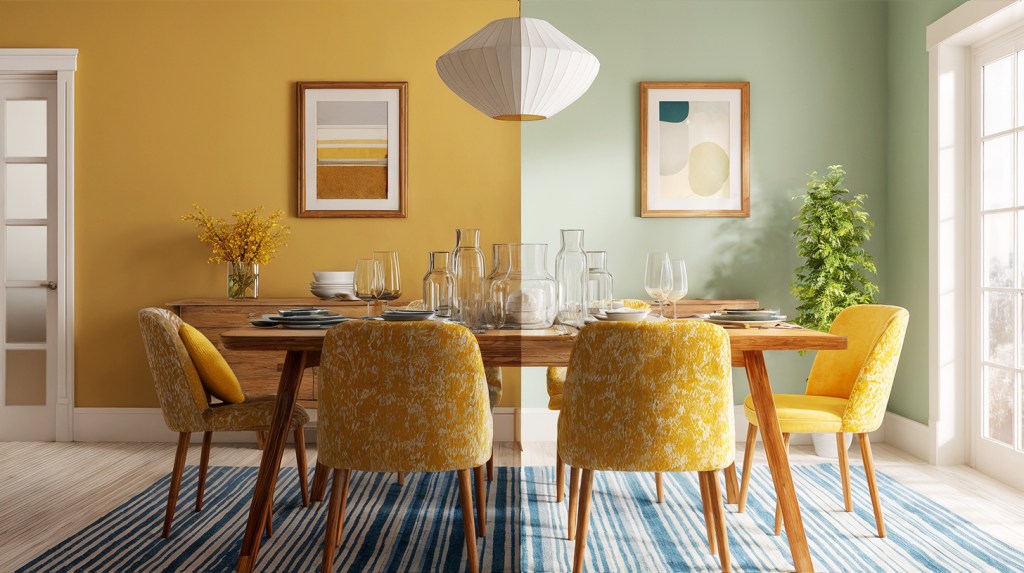
Comparison showing the impact of light paint colors on natural light reflection in a dining room.
2. The Mirror Trick (But Make It Strategic)
Mirrors can genuinely double the natural light in a room if you position them correctly. The key word is if.
The right way:
- Place mirrors perpendicular to windows (on adjacent walls), not directly opposite
- Position them to reflect outdoor views or light, not just your reflection
- Larger mirrors capture and redirect more light
Where mirrors work best:
- Narrow hallways: Large mirror at the end opposite a window
- Dark dining rooms: Leaning floor mirror behind a console
- Bathrooms without windows: Multiple small mirrors creating a gallery wall
- Entryways: Welcome light from nearby rooms
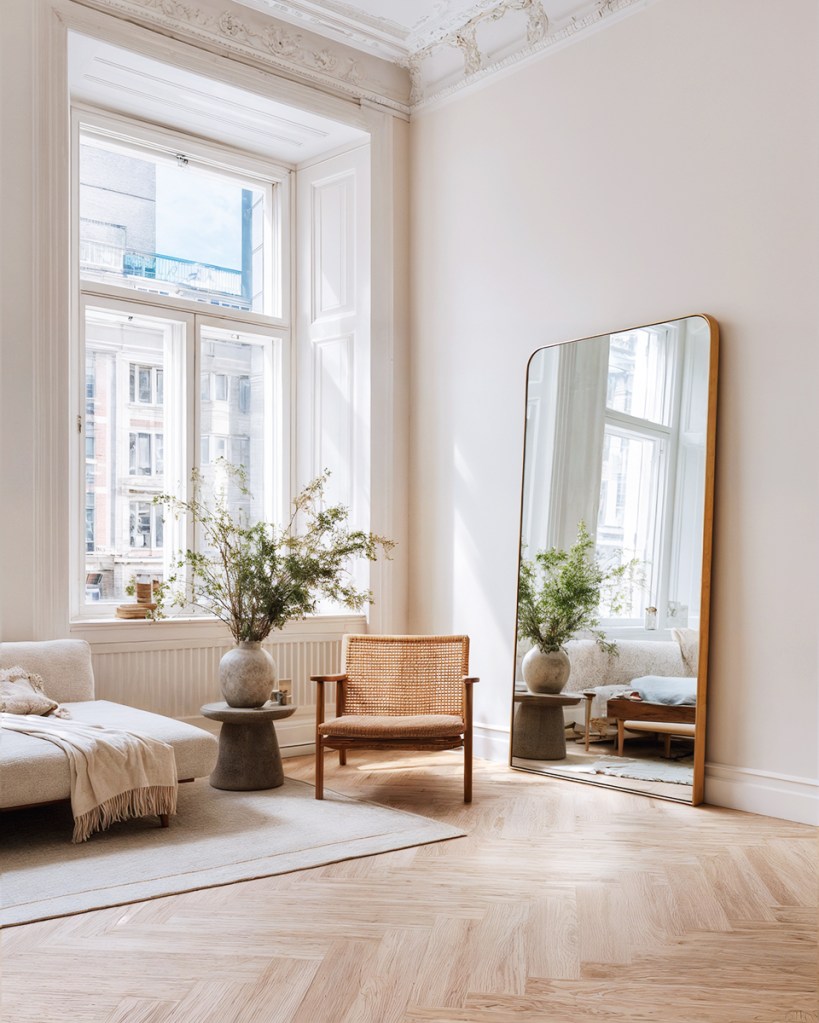
Large mirror strategically placed perpendicular to window reflecting natural light into Scandinavian living room.
The mistake to avoid: Placing mirrors directly opposite windows. This creates glare and reflects light right back out instead of bouncing it deeper into the space.
3. Choose Furniture That Works With Light
Your furniture choices dramatically impact how light moves through rooms.
Materials that maximize light:
- Glass: Coffee tables, side tables, chair legs—transparent materials let light pass through
- Metallic finishes: Brass, copper, and chrome act as reflective accents
- Light-colored upholstery: White, cream, pale gray fabrics reflect rather than absorb
Furniture placement tips:
- Float furniture: Pull pieces 6-12 cm away from walls so light can wrap around them
- Lower profiles: Low-slung sofas and chairs keep sightlines (and light paths) open
- Avoid blocking windows: Keep furniture at least 12 cm from window walls
Transparent furniture allows natural light to pass through the room unobstructed.
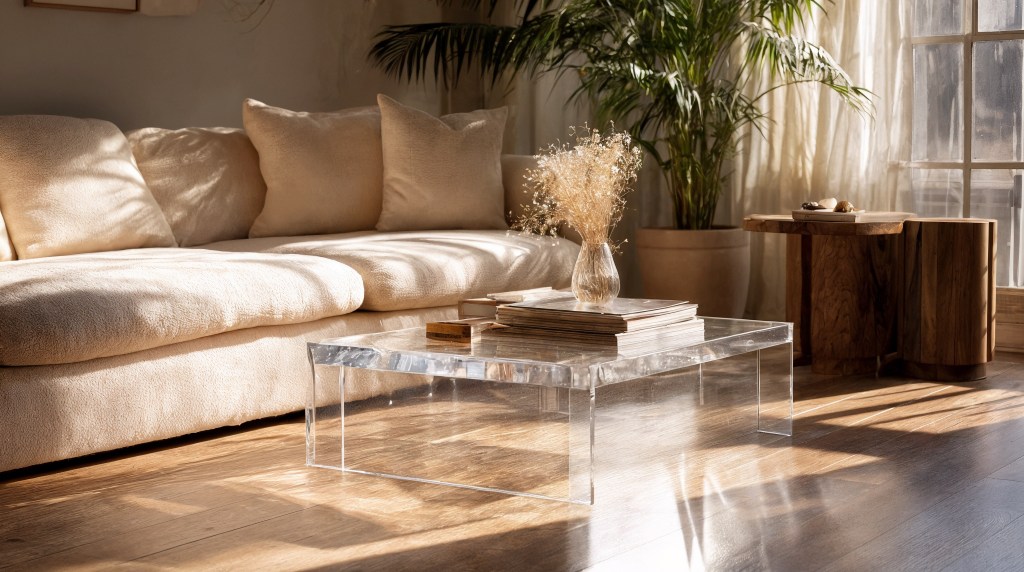
The mistake to avoid: Heavy, dark furniture positioned right in front of windows or blocking natural light pathways.
4. Window Treatment Ideas That Actually Work
The wrong window treatments can sabotage even the sunniest room. Here’s how to get it right.
For maximum light + privacy:
- Sheer linen curtains. Install curtain rods 6-12 inches beyond the window frame on each side. When drawn open, curtains completely clear the glass. When closed, they filter harsh light without blocking it entirely.
- Top-down/bottom-up cellular shades help. Privacy when you need it (bottom covered), light when you want it (top open). Game-changer for bathrooms and street-facing rooms.
- Café curtains. Cover only the bottom half of windows. Victorian-era solution that’s quietly brilliant for kitchens and bathrooms.
For filtered light:
- Bamboo or woven wood shades: Filter light into beautiful dappled patterns while obscuring direct views. Very japonisme.
- Honeycomb shades in translucent fabrics: Insulation and light diffusion. The pleated structure softens harsh rays while maintaining daytime privacy.
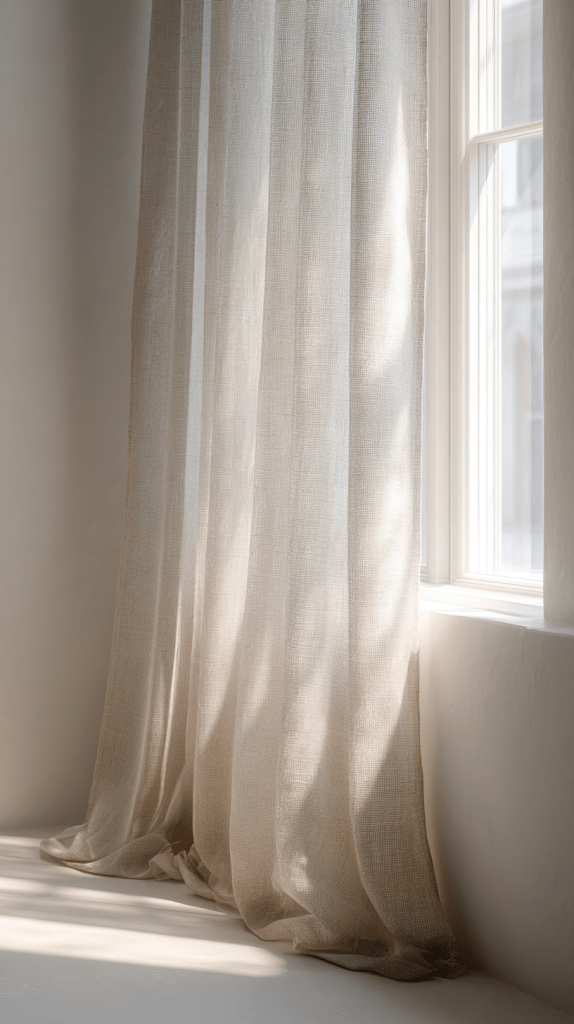
Sheer white linen curtains mounted wide of window frame allowing maximum natural light.
What to avoid: Heavy blackout curtains left closed during the day, dark-colored treatments, horizontal blinds permanently half-closed.
5. Clear the Obstacles (Inside and Outside)
Sometimes the problem isn’t your space—it’s what’s blocking light from entering.
Outside your windows:
- Trim overgrown trees or bushes blocking windows
- Clean windows inside and out (seriously, dirty windows can block 20-40% of light)
- Remove window screens during months you don’t need them (they can reduce light by 30%)
Inside your rooms:
- Keep windowsills clear of clutter
- Move tall furniture or plants away from windows
- Remove unnecessary curtain layers
The 5-Minute Quick Win: Clean your windows. Inside and out. You’ll be shocked at the difference.
6. Add Reflective Surfaces Strategically
Beyond mirrors, other reflective surfaces amplify natural light:
- Glossy paint finishes on trim and doors (vs. matte)
- Metallic picture frames and accessories
- Glass or acrylic side tables
- High-gloss furniture finishes
- Metallic light fixtures that catch and bounce daylight
Multiple reflective surfaces including metallic fixtures and glossy finishes multiplying natural light.
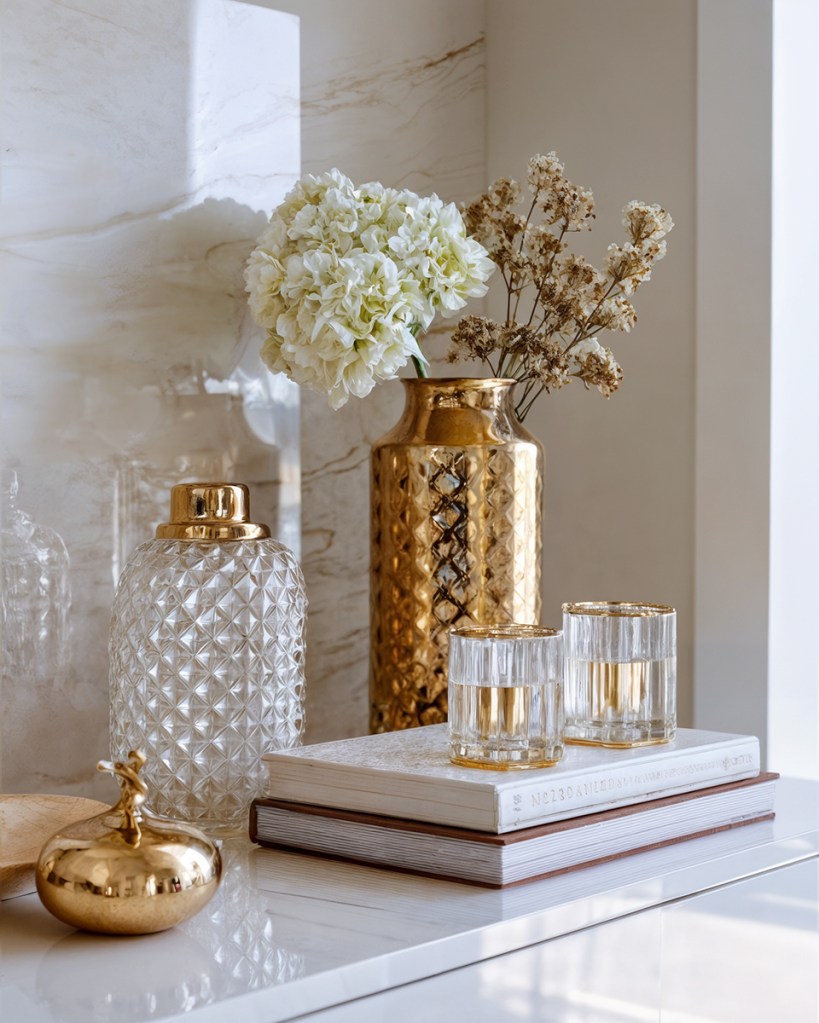
The balance: You want enough reflective surfaces to amplify light without creating a disco ball effect. Aim for 20-30% of surfaces in a room to have some reflective quality.
7. Use Light-Bouncing Accessories
Small additions can make measurable differences:
- Metallic lamp bases that reflect daylight even when off
- Light-colored books on shelves (or turn dark spines inward)
- Pale artwork frames instead of dark wood
- White or cream ceramics and vases
- Light-colored throw pillows and blankets
The principle: Every surface either absorbs or reflects light. The more surfaces that reflect (even a little), the brighter your space feels.
When Artificial Light Should Feel Like Natural Light
Even the brightest homes need help. The key is making artificial light feel like an extension of daylight, not a contradiction to it.
The Layered Lighting Strategy
Ambient (overhead lighting): Warm LED recessed lights (2700-3000K color temperature) on dimmer switches. Never install just one central fixture—it creates harsh shadows and flat, unflattering light.
Task lighting: Under-cabinet LED strips in kitchens, reading lamps with adjustable arms, pendant lights over work surfaces. These should be slightly cooler (3000-3500K) for focus and clarity.
Accent lighting: Picture lights, uplighting on plants, LED strips behind floating shelves. These create depth and guide the eye the way natural light does as it moves through spaces.
The Circadian Rule
Our bodies respond to light temperature and intensity. Our bodies respond to light temperature and intensity throughout the day. The trick is mimicking natural light patterns. Use cooler, brighter light in the morning to wake up. Neutral white light at midday is best for focus. Warmer, dimmer light in the evening helps to wind down. It’s how sunlight naturally behaves, and your internal clock knows it.
Smart bulbs can automate this transition, but even manual adjustments help align your home with natural rhythms. The biggest mistake? Using the same light temperature and intensity all day. It confuses your body’s natural clock and makes spaces feel artificial rather than authentic.
How to mimic natural light patterns:
- Morning: Cooler, brighter light (3500-5000K) to wake up
- Midday: Neutral white light (3000-3500K) for focus
- Evening: Warmer, dimmer light (2400-2700K) to wind down
Smart bulbs can automate this transition, but even manual adjustments help align your home with natural rhythms.
The mistake to avoid: Using the same light temperature and intensity all day. It confuses your body’s natural clock and makes spaces feel artificial rather than authentic.
Room-by-Room Guide to Maximize Natural Light
Let’s get specific about how to brighten dark rooms in every part of your home.
Living Room: The Social Hub
Light challenges: Needs to function day and night, for conversation and movie-watching
How to maximize natural light:
Start with your furniture arrangement. Float your sofa instead of pushing it against walls. Position seating to embrace windows rather than block them. For window treatments, install sheer curtains on a rod that extends 8-12 inches beyond the frame. This ensures windows are completely unobstructed when open.
Place a large mirror on the wall perpendicular to your biggest window (not opposite it, which creates glare). Keep your color strategy light. Use warm white or pale neutral walls. Choose a cream or light gray sofa. Incorporate light wood or pale tile flooring. All these elements help reflect available light.
Finally, layer your lighting with a floor lamp, two table lamps, and overhead fixtures on dimmers. Multiple light sources at different heights mimic how natural light comes from various angles throughout the day.
Quick win: Move any tall bookcases or armoires away from windows.
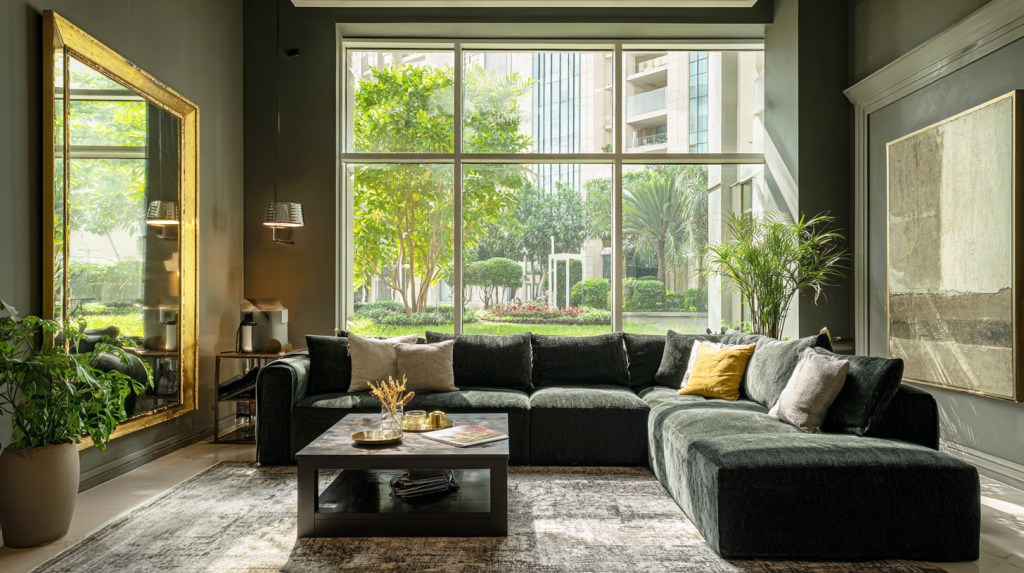
Living room arranged to maximize natural light with strategic furniture placement and mirror positioning.
Kitchen: Where Morning Light Matters Most
Light challenges: Requires bright, clear light for food prep and safety, often has upper cabinets that block light
How to maximize natural light: If you have any control over kitchen location, choose eastern exposure. It provides that energizing morning glow. It genuinely makes your morning coffee routine better.
For upper cabinets, consider open shelving or glass-front cabinets if you’re renovating. They let light pass through. This prevents shadow blocks. If you’re keeping solid cabinets, painting them white or cream makes a significant difference. Choose backsplashes that reflect light. Options like white subway tile, light marble, or glossy white glass all bounce brightness back into the room.
Keep window treatments minimal or skip them entirely if privacy allows. If you need coverage, café curtains or a simple valance work without blocking light. Finally, install under-cabinet LED strips to eliminate the counter shadows that upper cabinets inevitably create.
Kitchen designed to maximize natural light with white cabinets and reflective surfaces.
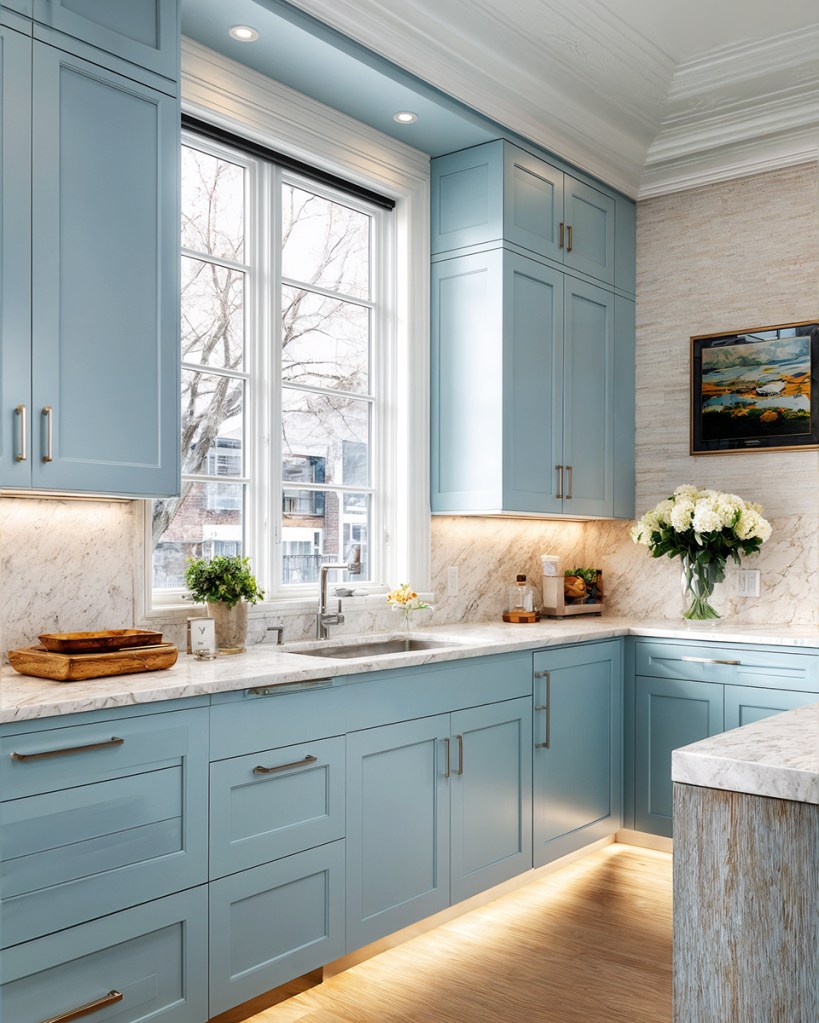
Quick win: Replace solid upper cabinet doors with glass-front doors to let light pass through.
Bedroom: The Flexibility Challenge
Light challenges: Needs energizing morning light but blackout-level darkness for sleep
How to maximize natural light (during waking hours): The key to bedroom lighting is dual window treatments. Install sheers on one rod for daytime. Use blackout curtains or shades on a separate track for sleep. This gives you the best of both worlds without compromise.
Think strategically about bed placement. Position it to catch morning light if you’re an early riser. Place it away from direct light if you prefer waking gradually. Your color choices are important. White or light-colored bedding reflects light and makes the room feel airier. Dark, moody colors work best in rooms that already have abundant natural light.
Place a full-length mirror perpendicular to your window. This will bounce light into darker corners. Choose low-profile bed frames and nightstands. They keep sightlines open and allow light to travel further into the room.
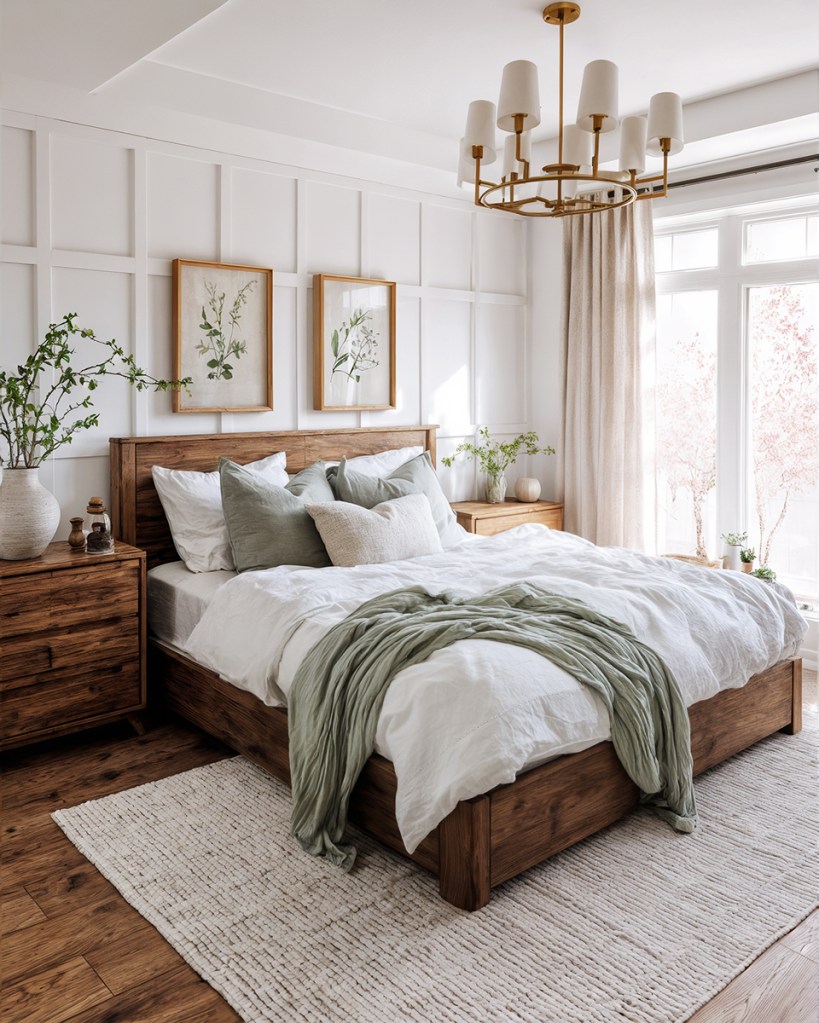
Bedroom with window treatments allowing natural light control throughout the day.
Quick win: Open curtains immediately upon waking (or use smart curtains that open automatically with sunrise).
Home Office: The Glare Problem
Light challenges: Screen glare vs. need for bright, focus-supporting light
How to maximize natural light (without glare): The golden rule for home offices is desk positioning. Place your desk perpendicular to windows. Don’t face them, and don’t put your back to them. This way, you get natural light from the side. It avoids screen glare and the silhouetting effect that makes video calls look terrible.
Choose adjustable window treatments. Options include top-down cellular shades or vertical blinds. These allow you to control exactly how much light enters. They also enable you to decide the direction from which light comes throughout the day. Even with good natural light, you’ll want a desk lamp for detailed work. Position it opposite your dominant hand to minimize shadows on your workspace.
For anti-glare strategies, use matte screen protectors. Ensure your monitor is adjustable. Opt for matte paint finishes on walls to reduce reflections. Keep your color choices light. Choose neutral walls. A light-colored desk surface, such as white, light wood, or pale laminate, helps maximize the natural light you’re working with.
Home office with desk positioned to maximize natural light while avoiding screen glare.
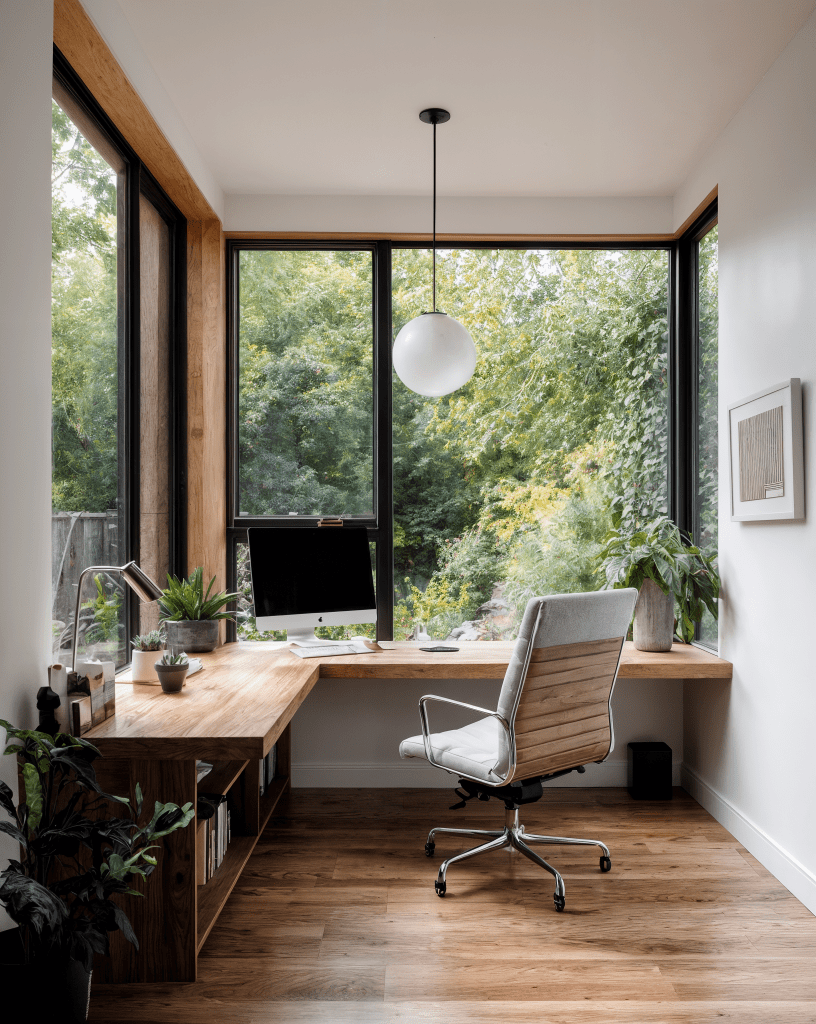
Quick win: Adjust your desk position. Make sure that natural light comes from the side. It should not come from behind or in front of your screen.
Bathroom: The Often-Forgotten Space
Light challenges: Frequently windowless or small-windowed, needs good light for grooming
How to maximize natural light (or fake it convincingly):
If you’re lucky enough to have a window, use café curtains for privacy. Textured or frosted glass also provides privacy while still allowing light to filter through. Roman shades in translucent fabric work beautifully too.
If you’re renovating a windowless bathroom, consider a sun tunnel or light tube. It brings actual daylight in through a reflective tube from the roof. The difference is remarkable. For mirror strategy, go large or go multiple. Mirrors multiply whatever light you have, and a mirror opposite a window literally doubles its light contribution.
Your color strategy should be uncompromising. Use white or very light tile on both floors and walls. Choose glossy finishes that reflect light. Also, use light-colored grout that doesn’t create dark lines. Finally, choose clear glass shower doors instead of frosted panels or curtains. They allow light to flow through the entire space, rather than blocking it in one corner.
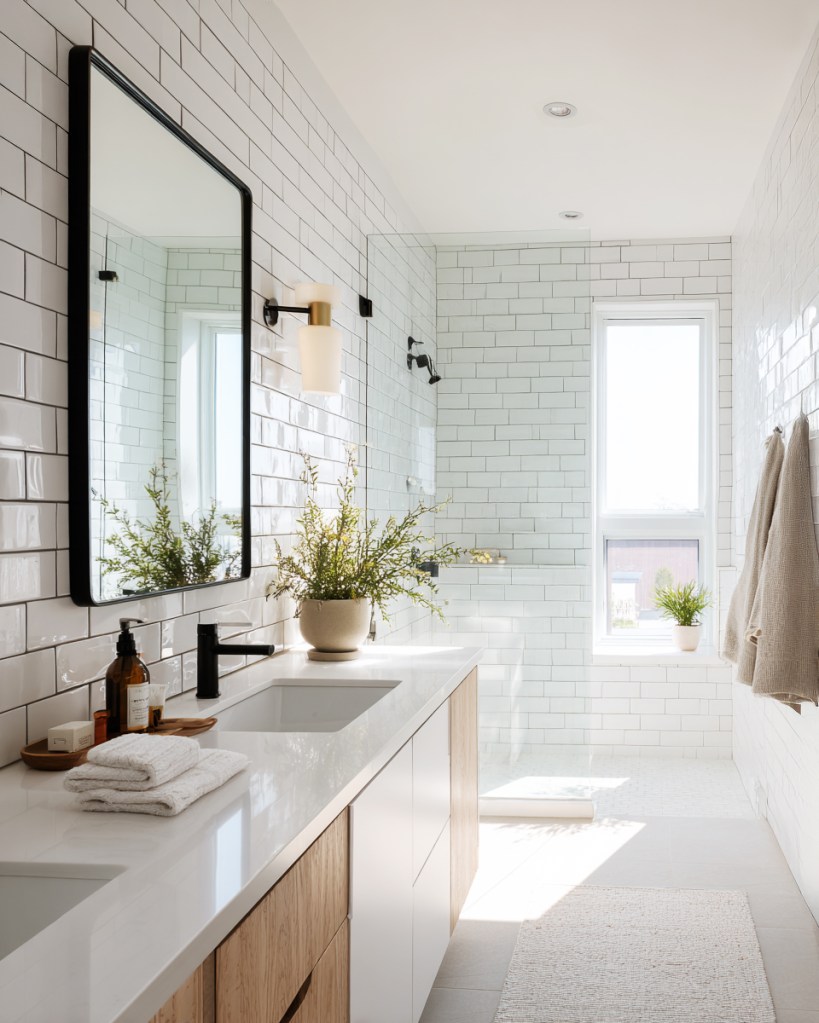
Bathroom maximizing limited natural light through white surfaces and strategic mirror placement.
Quick win: Replace a solid shower curtain with a clear one to allow light to circulate throughout the bathroom.
Hallways & Dark Corners: The Neglected Spaces
Often interior spaces with no direct window access, typically afterthoughts in design. You may consider
How to brighten dark rooms and hallways: The trick with hallways is borrowing light from adjacent rooms. Replace solid doors with glass-paneled doors. You can also add transoms above doorways to let light travel between spaces. If there’s any light source at either end (even from a distant window), place a mirror at the opposite end. This mirror captures and reflects the light down the length of the hall.
Make hallways your lightest paint color—even lighter than adjacent rooms. Consider semi-gloss or satin finish for more light reflection. Install wall sconces with uplighting to create ambient glow that mimics natural light bouncing off ceilings.
Finally, eliminate visual barriers by keeping hallway floors clear and avoiding large furniture pieces that create shadow blocks.
Quick win: Add a large mirror at the end of your hallway, positioned to reflect any available light source.
When to Consider Structural Changes (The Investment Options)
Sometimes, despite your best efforts, the problem isn’t how you’re using light. The issue is that there simply isn’t enough of it to work with. If you’ve tried everything and your space still feels dark, it might be time to consider structural solutions.
Skylights: Bringing Light from Above
We’ve seen skylights completely transform interior bathrooms and hallways that felt like caves. They’re particularly magical in spaces with no exterior walls. Suddenly you have natural light where it seemed impossible.
Modern skylights have come a long way. You can get solar-powered blinds. Some have rain sensors that automatically close them. There are remote controls available. You can even find versions that adjust their tint based on sun intensity. If you’re planning to stay in your home long-term, consider skylights. They are worth serious consideration for genuinely dark interior spaces where nothing else works.
Sun Tunnels: The Clever Alternative
Not ready to commit to a full skylight? Sun tunnels (also called light tubes) solve the same problem for smaller spaces and tighter budgets. A reflective tube channels daylight from your roof down through your ceiling. Remarkably simple, surprisingly effective.
Here’s what impressed us: a 10-inch tube can provide illumination equivalent to a 300-watt bulb during daylight hours. For spaces where you just need functional brightness rather than a view, they’re brilliant.
Expanding Your Window Situation
You have exterior walls but inadequate windows. This is your opportunity to transform a room’s relationship with outdoor space. It also allows you to enhance the light. Window replacement runs $1,000-$3,000 per window, while French or sliding glass doors cost $2,500-$8,000.
This makes most sense if you’re already doing a major renovation. It also makes sense if you have a poorly utilized exterior wall. Maybe it’s a room with one small window that could handle a much larger one. It could also be a blank wall that could become a wall of glass. The bonus? It adds genuine resale value, especially when you’re replacing outdated windows with modern, energy-efficient ones.
Borrowing Light Between Rooms
Sometimes the issue isn’t lack of windows—it’s that solid walls are blocking light from traveling between rooms. Glass interior walls or doors let you borrow light from bright spaces to illuminate dark ones. Glass-paneled interior doors run $800-$3,000, while full steel-framed glass walls (hello, Crittall style) cost $2,000-$8,000.
This solution is perfect if you love your floor plan but hate how certain rooms feel cut off and dark. Not ready for full glass walls? Start smaller with transoms above existing doorways. They follow the same light-borrowing principle. It’s a much smaller investment. You can add them one at a time.
Quick Reference and Check List: 15 Ways to Brighten Dark Rooms Right Now
Sometimes you just need the checklist. Here are 15 actionable steps to maximize natural light, organized by effort level:
No-Cost Changes (Under 30 Minutes)
- Clean your windows inside and out. You’ll gain 20-40% more light
- Open curtains wide and tie them back beyond the window frame
- Rearrange furniture to stop blocking windows or light pathways
- Remove window screens during seasons you don’t need them
- Declutter windowsills and nearby surfaces
Low-Cost Changes
- Add a large mirror positioned perpendicular to your brightest window
- Replace dark throw pillows with white or cream ones
- Swap heavy curtains for sheer linen panels
- Buy light-colored area rugs for dark floors
- Add metallic accessories (brass lamp, copper vase) as light reflectors
Medium Investment
- Paint walls in light, warm neutrals or soft whites
- Install cellular shades in translucent fabrics
- Replace solid interior doors with glass-paneled versions
- Add wall-mounted mirrors strategically throughout dark spaces
- Upgrade to light-colored curtains on extended curtain rods
Final Thoughts: Light Is Never Static
Here’s what we’ve learned from chasing good light across apartments in four countries: It’s never static. The room that glows in May might sulk in November. The corner that’s perfect for morning coffee is too bright for afternoon naps. The window that floods your home office with light in summer barely registers in winter.
The homes that handle light best aren’t the ones with the most windows. They’re the ones that stay flexible. Curtains that open wide when you want them and close when you don’t. Furniture on glides that can be repositioned seasonally. Dimmers on every light switch. Light-colored bases that let you experiment with darker accents in naturally bright seasons.
Start small. Watch your light for a week like we talked about in the beginning. Notice the patterns. Then change one thing—a mirror’s position, your curtain color, a lamp’s placement—and see what shifts. You’ll develop an intuition for what works in your specific space.
Because when you get light right, you’re not just brightening rooms. You’re creating spaces that welcome you home. These spaces shift with your rhythms. They feel like they’re working with the sun instead of fighting it.
That’s not just good design. That’s life-affirming architecture.

